
Mutual Consent Divorce in Tamil Nadu: What to Expect (2026 Complete Legal Guide)
25 July 2026 · Juris & Nova Chambers
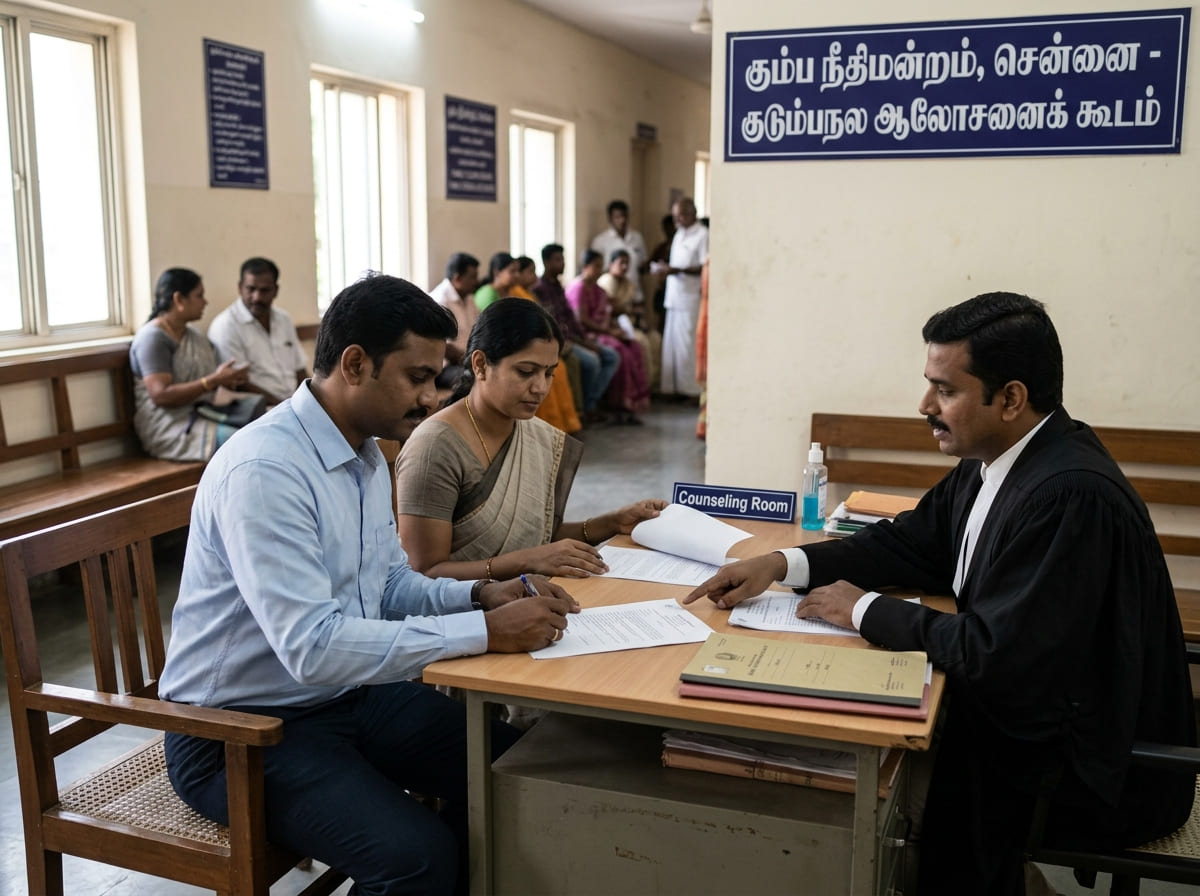
Mutual Consent Divorce in Tamil Nadu: What to Expect (2026 Complete Legal Guide)
Marriage is a significant legal and personal commitment. While many marriages succeed, some relationships reach a stage where both spouses mutually agree that ending the marriage is the most practical solution. In such cases, mutual consent divorce offers a relatively simple, less adversarial, and legally recognised process for dissolving a marriage.
In Tamil Nadu, mutual consent divorce enables both spouses to jointly approach the Family Court, expressing their decision to end the marriage amicably. Compared to a contested divorce, this process is generally more efficient, less stressful, and allows both parties to resolve important issues such as maintenance, child custody, and division of assets through mutual agreement.
This comprehensive guide explains the eligibility criteria, legal procedure, documents required, timeline, settlement issues, frequently asked questions, and practical considerations involved in obtaining a mutual consent divorce in Tamil Nadu.
What is Mutual Consent Divorce?
A mutual consent divorce is a legal process in which both husband and wife jointly request the court to dissolve their marriage because they have mutually agreed that they cannot continue living together.
Unlike a contested divorce, where one spouse files against the other based on legal grounds, mutual consent divorce is founded on the agreement of both parties to end the marriage peacefully.
This process allows couples to avoid prolonged litigation and encourages amicable settlement of related issues.
Legal Framework Governing Mutual Consent Divorce
The legal provisions applicable to mutual consent divorce depend on the personal law governing the marriage.
For example:
- Hindu marriages are governed by the Hindu Marriage Act, 1955.
- Christian marriages are governed by the Indian Divorce Act.
- Muslim marriages are governed by the applicable principles of Muslim personal law and other relevant legislation.
- Civil marriages solemnised under the Special Marriage Act are governed by the Special Marriage Act, 1954.
The applicable legal requirements may vary depending on the circumstances of each case.
Why Do Couples Choose Mutual Consent Divorce?
Many couples prefer mutual consent divorce because it offers a more cooperative and less confrontational approach.
Some common reasons include:
- Irreconcilable differences
- Lack of compatibility
- Long-term separation
- Frequent misunderstandings
- Financial disagreements
- Career-related relocation
- Breakdown of trust
- Family conflicts
- Different life goals
Choosing an amicable legal process often helps both parties move forward with greater certainty.
Eligibility for Mutual Consent Divorce
Although the specific legal requirements depend on the applicable law, the following conditions are generally relevant:
- Both spouses voluntarily agree to dissolve the marriage.
- The decision is made without coercion or undue influence.
- The parties have mutually settled important issues such as maintenance, child custody, and property, where applicable.
- The legal requirements under the governing statute are satisfied.
A lawyer can assess whether the facts of a particular case meet the legal criteria.
Advantages of Mutual Consent Divorce
Many couples choose this process because of its practical benefits.
Less Stressful
The proceedings are generally less adversarial than contested litigation.
Faster Resolution
Mutual consent matters often conclude more quickly than contested divorce cases, although the timeline depends on the facts and applicable legal requirements.
Lower Litigation Costs
Fewer hearings and agreed settlements can reduce overall legal expenses.
Privacy
Sensitive personal disputes are usually handled with greater confidentiality than lengthy contested proceedings.
Better Relationship After Divorce
Where children are involved, an amicable separation may help parents maintain a cooperative relationship.
Step-by-Step Mutual Consent Divorce Process
Step 1: Consult a Family Lawyer
The first step is to obtain legal advice.
An experienced family lawyer will:
- Review the facts.
- Explain the applicable legal provisions.
- Discuss settlement terms.
- Prepare the required documents.
Step 2: Discuss the Settlement
Before filing the petition, both spouses should discuss and, where possible, reach agreement on matters such as:
- Permanent alimony or maintenance
- Child custody
- Child visitation
- Education expenses
- Property division
- Return of jewellery or personal belongings
- Bank accounts and financial settlements
A written settlement helps minimise future disputes.
Step 3: Prepare the Joint Petition
The advocate drafts a joint petition containing:
- Marriage details
- Date and place of marriage
- Period of separation (where relevant)
- Reasons for seeking divorce
- Settlement terms
- Request for dissolution of marriage
Both spouses review and sign the petition.
Step 4: Filing Before the Family Court
The petition is filed before the appropriate Family Court having jurisdiction.
The court registers the matter and fixes a date for hearing.
Step 5: Appearance Before the Court
Both spouses generally appear before the court.
The judge may:
- Verify their identities.
- Confirm that the consent is voluntary.
- Ascertain whether reconciliation is possible.
- Review the settlement terms.
Step 6: Court Proceedings
Depending on the applicable law and judicial directions, the court considers the petition, records the statements of the parties, and proceeds in accordance with the statutory requirements.
Step 7: Final Decree
If the court is satisfied that all legal requirements have been fulfilled and the consent is genuine, it may grant a decree dissolving the marriage.
Documents Required for Mutual Consent Divorce
The documents required vary depending on the facts of each case, but commonly include:
- Marriage Certificate (if available)
- Wedding photographs
- Identity proof of both spouses
- Address proof
- Passport-sized photographs
- Proof of marriage ceremony (where relevant)
- Joint settlement agreement
- Income documents (where maintenance is involved)
- Children's birth certificates (if applicable)
- Property documents (where property settlement is involved)
Additional documents may be required depending on the circumstances.
Child Custody in Mutual Consent Divorce
Where children are involved, the welfare of the child is a primary consideration.
Parents may mutually agree regarding:
- Sole custody
- Joint custody
- Visitation rights
- School education
- Medical expenses
- Holidays
- Financial support
The court examines the arrangement to ensure that it serves the best interests of the child.
Alimony and Maintenance
Spouses may agree upon maintenance or permanent alimony as part of the settlement.
The arrangement may include:
- Lump-sum settlement
- Monthly maintenance
- No maintenance by mutual agreement
- Financial support for children
The amount depends on factors such as income, financial capacity, needs, and the circumstances of the parties.
Property Settlement
Mutual consent divorce allows couples to resolve property-related issues without lengthy litigation.
Matters may include:
- Residential property
- Jointly owned flats
- Land
- Bank accounts
- Investments
- Vehicles
- Jewellery
- Household articles
A clearly drafted settlement helps prevent future disputes.
Can Couples Withdraw Mutual Consent?
Yes.
Until the legal process reaches the stage prescribed by law and the court passes the final decree, either spouse may withdraw consent in accordance with the applicable legal principles.
If mutual consent is withdrawn, the court may not be able to proceed with granting a mutual consent divorce.
Common Reasons for Delay
Although mutual consent divorce is generally more efficient than contested litigation, delays may occur due to:
- Incomplete documents
- Failure to appear before the court
- Changes in settlement terms
- Disputes regarding child custody
- Property disagreements
- Maintenance issues
- Jurisdictional questions
Proper legal preparation can help reduce avoidable delays.
Common Mistakes to Avoid
Couples should avoid:
- Signing settlement agreements without understanding the terms.
- Concealing assets or liabilities.
- Ignoring tax or financial implications.
- Making verbal promises without documenting them.
- Delaying the filing after reaching agreement.
- Withholding important documents.
Professional legal advice can help ensure that the settlement is fair and comprehensive.
Is Court Appearance Necessary?
In most cases, court procedures require the participation of the parties in accordance with the applicable law and directions of the Family Court.
However, procedural aspects may vary depending on judicial orders and the specific facts of the case.
Why Hire a Family Lawyer?
A family lawyer assists with:
- Legal advice
- Drafting the joint petition
- Settlement agreements
- Property settlement
- Child custody arrangements
- Maintenance discussions
- Court representation
- Ensuring compliance with legal requirements
Proper legal guidance helps minimise procedural errors and protects the interests of both parties.
Frequently Asked Questions
What is mutual consent divorce?
It is a legal process where both spouses jointly request the court to dissolve their marriage based on mutual agreement.
Is mutual consent divorce faster than contested divorce?
In many cases, yes. Mutual consent divorce is generally less time-consuming than contested proceedings, although the exact duration depends on the facts and legal requirements.
Can we decide our own settlement?
Yes. Parties may mutually agree on issues such as maintenance, child custody, and property, subject to the court's consideration where required.
Is a lawyer mandatory?
While parties may have the right to appear in person in certain circumstances, obtaining professional legal advice is strongly recommended to ensure that the process is handled correctly.
Can we file if we live in different cities?
Jurisdiction depends on the applicable law and the facts of the case. A lawyer can advise on the appropriate Family Court.
Can mutual consent be withdrawn?
Yes. Under the applicable legal framework, consent may be withdrawn before the final decree in certain circumstances.
Is alimony compulsory?
Not necessarily. Parties may mutually agree on maintenance arrangements, subject to the applicable legal provisions.
Can child custody be decided together?
Yes. Parents may reach an agreement regarding custody and visitation, and the court considers whether the arrangement serves the child's welfare.
Do we have to attend court personally?
Court appearance requirements depend on the applicable procedural law and the directions issued by the court.
Can we remarry after mutual consent divorce?
Once the decree of divorce has become legally effective and any applicable legal requirements are satisfied, the parties may remarry in accordance with law.
Practical Tips Before Filing
Before initiating mutual consent divorce proceedings:
- Discuss all financial matters openly.
- Prepare a written settlement.
- Gather all necessary documents.
- Consider the long-term interests of any children.
- Keep communication respectful.
- Seek independent legal advice where appropriate.
- Understand the legal consequences of the settlement.
Careful preparation can make the process smoother and reduce the likelihood of future disputes.
Conclusion
Mutual consent divorce offers couples a practical and dignified way to end a marriage when reconciliation is no longer possible. By resolving issues such as maintenance, child custody, and property through mutual agreement, the process can reduce emotional stress, legal costs, and prolonged court proceedings.
Every family situation is unique, and the applicable legal requirements depend on the personal law governing the marriage and the facts of the case. Seeking timely legal advice helps ensure that the petition is properly prepared and that the rights of both parties are protected throughout the proceedings.
Need Legal Assistance for Mutual Consent Divorce in Tamil Nadu?
If you and your spouse are considering a mutual consent divorce, Juris And Nova Chambers provides professional legal guidance with sensitivity, confidentiality, and practical advice.
Our family law services include:
- Mutual Consent Divorce
- Contested Divorce
- Child Custody Matters
- Maintenance and Alimony
- Property Settlement
- Domestic Violence Matters
- Restitution of Conjugal Rights
- Family Court Representation
Our experienced family law team assists clients across Chennai and Tamil Nadu, ensuring that every matter is handled with professionalism, compassion, and attention to legal detail.
Contact Juris And Nova Chambers today to schedule a confidential consultation and understand the legal options available for your circumstances.